Retaining Walls & Concrete Masonry
Structural retaining walls and concrete masonry that solve drainage problems and enhance your property.
Why Properties Need Retaining Walls
Sloped yards and hillsides present challenges for property owners. Soil erosion washes away landscaping, water runoff creates drainage problems, and steep slopes limit usable yard space. Retaining walls solve these problems by holding back soil, managing water flow, and creating level areas where none existed before. A well-designed retaining wall transforms problem slopes into attractive, functional outdoor spaces.
At MonarchHill Henderson Concrete, we design and build retaining walls throughout Henderson, KY that combine structural strength with attractive appearance. Whether you need a simple garden wall or a complex multi-tiered system, we bring the engineering knowledge and construction skill to build walls that perform reliably for decades. We work with both poured concrete and concrete block construction, choosing the best approach for your specific situation.
Retaining walls are more than decorative landscaping features. They are structural elements that must withstand significant soil pressure, water loads, and sometimes vehicle or building weight. Poor design or construction leads to bulging, cracking, or complete failure. We take wall construction seriously, properly sizing footings, installing drainage systems, and reinforcing walls appropriately for the loads they must handle. Our walls are built to last.
Types of Retaining Walls and Masonry Work
Different projects require different wall types. The right choice depends on wall height, soil conditions, appearance preferences, and budget. Here are the main types of retaining walls and masonry work we provide:
Our Retaining Wall Options:
- Poured concrete retaining walls for maximum strength and durability
- Concrete block (CMU) walls with reinforcement and grout fill
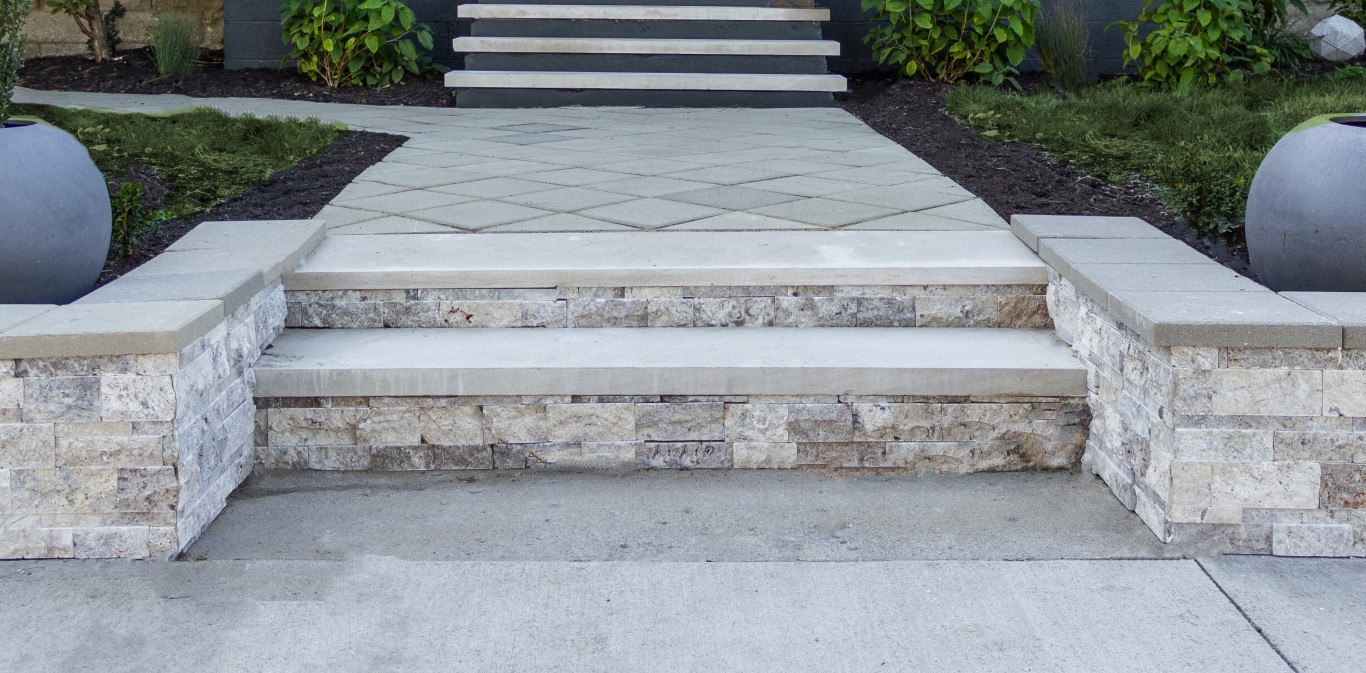
- Decorative block walls that combine function with attractive appearance
- Terraced wall systems for steep slopes
- Garden walls and planter boxes
- Concrete masonry foundations and stem walls
- Structural walls for buildings and additions
- Privacy walls and perimeter barriers
Poured concrete walls offer the greatest strength and are ideal for taller walls or walls supporting significant loads. We build forms to the required dimensions, install reinforcing steel, and pour concrete to create monolithic structures. These walls can be left with a smooth concrete finish, textured, or faced with stone veneer for enhanced appearance. Poured walls work well where appearance is secondary to function, such as behind garages or for utility area enclosures.
Concrete block walls provide excellent strength at lower cost than poured walls. We use concrete masonry units (CMUs) with steel reinforcement placed in the hollow cores. The cores are then filled with grout, creating a strong integrated structure. Block walls can be left natural, painted, or covered with stucco or stone veneer. This versatility makes them popular for both functional retaining walls and decorative applications. The modular nature of block also allows us to create curves, corners, and architectural details more easily than with poured concrete.
How We Build Retaining Walls That Last
Building retaining walls requires understanding structural principles, drainage requirements, and local soil conditions. We approach every wall project systematically to ensure long-term performance. Here is how we build walls that stand the test of time.
Engineering comes first. For walls over 4 feet tall or walls supporting buildings or driveways, we work with structural engineers to develop proper designs. The engineer specifies footing dimensions, reinforcement requirements, and drainage details based on soil reports and loading conditions. Even for smaller walls that do not require engineering, we follow proven design principles to size footings and reinforcement appropriately.
Foundation preparation is critical. Retaining walls need solid footings below frost depth to prevent heaving and settling. We excavate to undisturbed soil, level the footing base, and pour reinforced concrete footings sized for the wall height and loads. The footing must be wide enough to distribute soil pressure and prevent overturning. Cutting corners on footings leads to wall failure within a few years.
Drainage is perhaps the most important aspect of retaining wall construction. Water buildup behind walls creates enormous pressure that can cause failure. We install drainage systems behind every wall we build. This typically includes a perforated drain pipe at the footing level, wrapped in filter fabric and surrounded by gravel. The pipe carries water away to a suitable drainage outlet. We also backfill behind the wall with free-draining gravel rather than clay soil. Proper drainage dramatically extends wall life and prevents problems.
As we build the wall, we install reinforcement as required by design. For poured concrete walls, this means rebar grids in both directions. For block walls, we place vertical rebar in the cores and horizontal bond beam reinforcement at regular intervals. All reinforcement is tied properly and positioned correctly within the wall. After construction, we backfill carefully, compacting in lifts to avoid disturbing the new wall. The result is a structurally sound wall that will serve your property for decades.
Retaining Wall Frequently Asked Questions
Planning a retaining wall involves considerations about height, materials, drainage, and budget. Here are answers to common questions. For site-specific advice, contact us at (270) 517-6969.
Solve Your Slope and Drainage Problems
Get expert design and construction for your retaining wall project. We provide free consultations and detailed estimates for Henderson, KY properties.